Listening
Natalie studies routines, frustrations, collections, private habits, and the unspoken emotional brief. The first drawings often come after conversations rather than before them.
Process
The studio process is structured, but never mechanical. Each project moves through listening, spatial testing, material study, technical coordination, and a final phase of quiet calibration.
Natalie studies routines, frustrations, collections, private habits, and the unspoken emotional brief. The first drawings often come after conversations rather than before them.
Light, acoustics, view lines, thresholds, existing wear, and awkward corners are mapped. The studio looks for what the site is already trying to become.
Samples are handled, marked, photographed, and placed beside drawings. Materials must pass touch, shadow, maintenance, and aging tests before they enter the palette.
Plans, elevations, lighting diagrams, joinery packages, and finish schedules are developed with makers and consultants so the atmosphere survives construction.
The final days are for proportion, alignment, shelf heights, lamp warmth, curtain fall, hardware feel, and the small decisions that make the room settle.
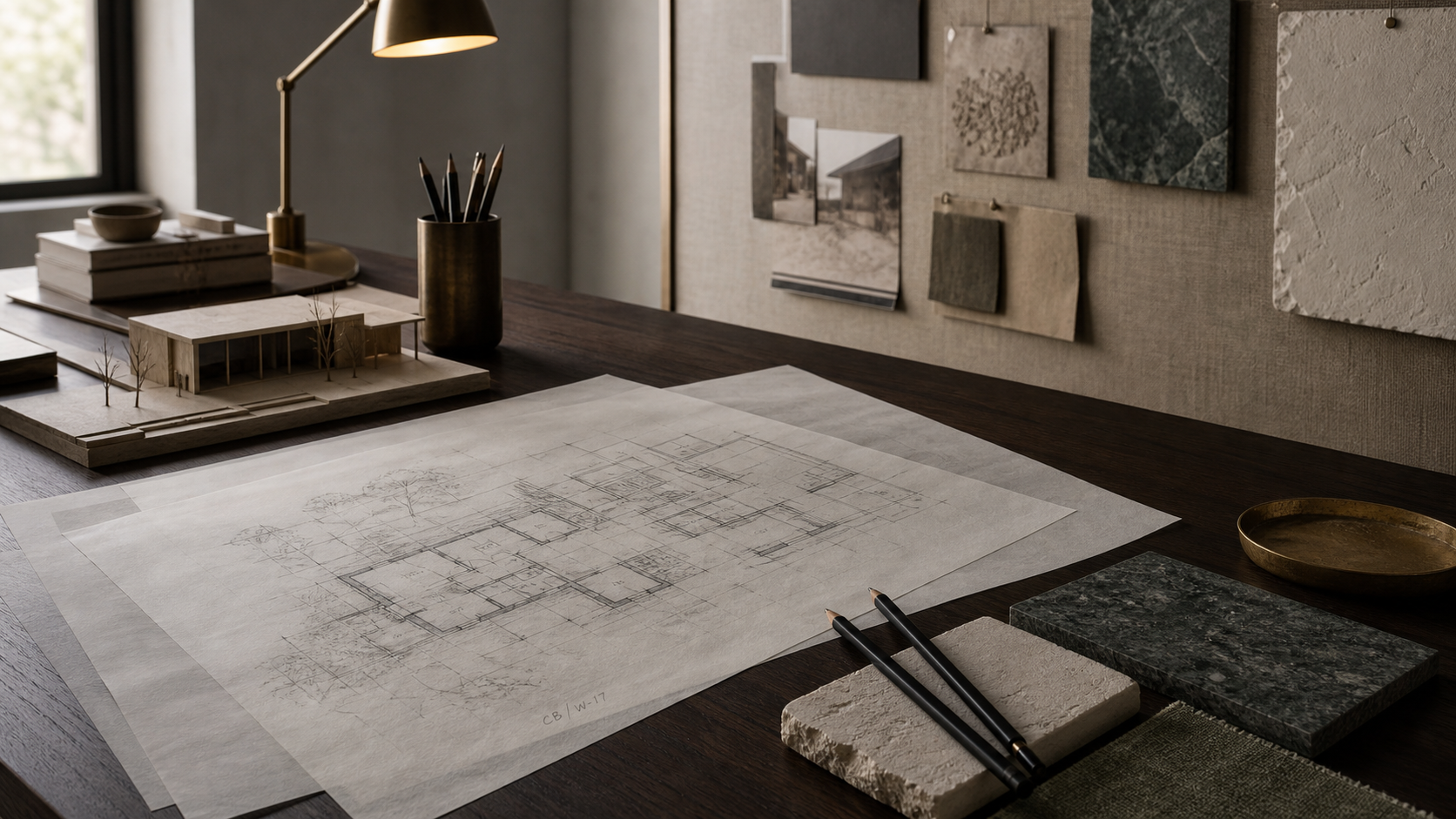
Studio table
Digital models help coordinate, but Natalie prefers to keep paper, plaster, stone, and wood in view. A room can look right on screen and still fail the hand.